

ALWAYS CONSULT YOUR INVESTMENT PROFESSIONAL BEFORE MAKING ANY INVESTMENT DECISION

June 1, 2026 | Getting Technical


Steve Saretsky


Happy Monday Morning!
For the first time in six years, the Canadian economy slipped into a recession. Real GDP fell by 0.1% on an annualized basis during the first quarter, Stats Canada reported on Friday. That follows a 1% contraction in the fourth quarter.

The mainstream media is framing it as a “technical recession” because I guess its the polite thing to do while we wait twelve months for a bunch of PhD’s at the CD Howe Institute to officially declare it.
Whether this number gets revised higher by a couple basis points a few months from now is irrelevant. The point is, for a lot of Canadians, these are tough times.
In the major metros of Toronto and Vancouver it’s felt like a recession for a few years now, especially if you’re involved in the Real Estate sector.
In fact, It’s long been argued that housing is the business cycle.
In a research paper titled ‘Housing is the Business Cycle’ written by Edward Leamer at the National Bureau of Economic Research, he argues:
Housing is not just another interest-rate-sensitive sector — it is the business cycle’s early-warning system. Residential investment may be a small share of long-run GDP growth, but around recessions it becomes disproportionately important. Housing turns first, consumer durables follow, and business investment typically weakens later. That sequencing matters. By the time the labour market rolls over and policymakers recognize the downturn, housing has often been flashing red for quarters.
The key insight is that housing downturns are not primarily price events — they are volume events. Prices are sticky on the way down, so when demand softens, transactions collapse. That drop in volume then ripples through construction, mortgage finance, real estate services, renovations, furniture, appliances, and local employment. In that sense, housing is less a side effect of the cycle and more often the mechanism through which the cycle arrives.
For regular readers of this newsletter, this is glaringly obvious. In Toronto and Vancouver we’ve already seen resale housing volumes collapse to multi-decade lows. Last year, the Greater Vancouver area endured a 25 year low in annual home sales.

This has flowed through to the construction sector, where investment demand has collapsed, killing the pre-sale market. The number of pre-sale condos sold has gone from 19,000 in 2021 to just 2900 last year. So far in 2026 we’ve sold 469 units, and are projecting to end the year somewhere around 1500. This is getting awfully close to zero when you consider how many of these 1500 sales will be cancelled once these projects don’t hit sales targets for construction financing.

This of course flows through into other consumer durables, such as appliances. Coast Appliances — which employs 300 people at nine distribution centres and 17 showrooms across Canada files for insolvency.

News of Coast Appliances’ difficulties wasn’t a surprise within Canada’s stressed development sector.
“I didn’t have any information about Coast, but I wasn’t surprised that a supplier to the residential development industry got in trouble,” said Michael Drummond, interim CEO of B.C.’s Urban Development Institute.
“When housing stalls, the whole supply chain feels it. Presales have basically collapsed, unsold inventory is rising, and it’s harder to (plan) any new thing right now.”
You don’t say.
Anyways, despite all of this, markets are still pricing in a rate hike from the Bank of Canada by the end of this year.

I guess markets believe the Bank of Canada can alleviate inflation derived from a war in the middle east by plunging a few more households into insolvency.
It’s worth noting that the Bank of Canada was projecting 1.5% annualized increase in GDP last quarter. Instead they got hit with a “technical recession”
One could argue they should probably be cutting, not hiking. But alas, don’t count on them to do the right thing. Need I remind you the Bank of Canada started hiking rates in March of 2022, one month after the housing market had peaked, and home prices had already inflated by a record 23% in a single year.
Patiently waiting, let’s watch.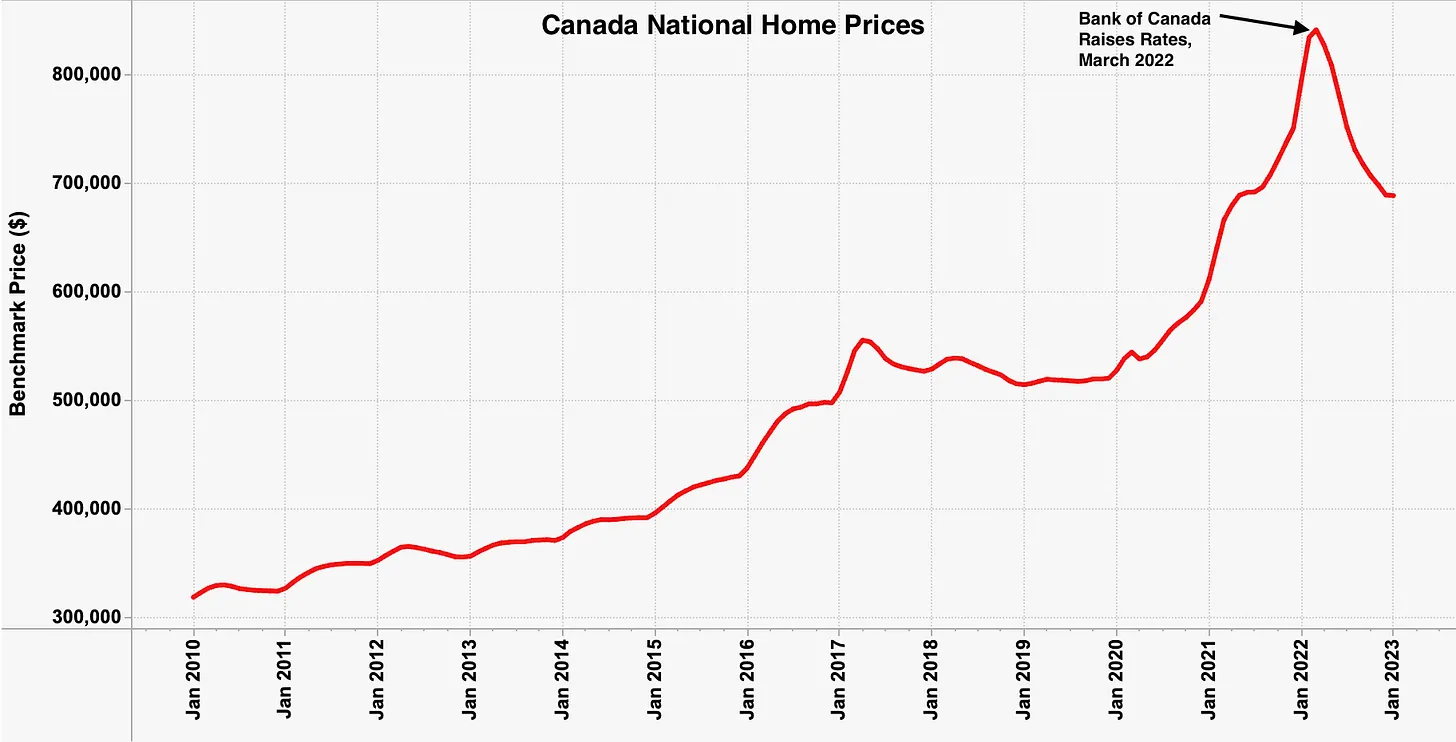
STAY INFORMED! Receive our Weekly Recap of thought provoking articles, podcasts, and radio delivered to your inbox for FREE! Sign up here for the HoweStreet.com Weekly Recap.
Steve Saretsky June 1st, 2026
Posted In: Steve Saretsky Blog
Next: The Fed’s Real Stress Test »