John Rubino is a former Wall Street financial analyst and author or co-author of five books, including The Money Bubble: What to Do Before It Pops and Clean Money: Picking Winners in the Green-Tech Boom. He founded the popular financial website DollarCollapse.com in 2004, sold it in 2022, and now publishes John Rubino’s Substack newsletter.
Most commodities, including big ones like oil, gold, and silver, have been bouncing all over the place in response to geopolitical and technical crosscurrents.
But not copper. The formerly boring metal has ignored the Iran war, rising interest rates, and central bank machinations to just keep going up.
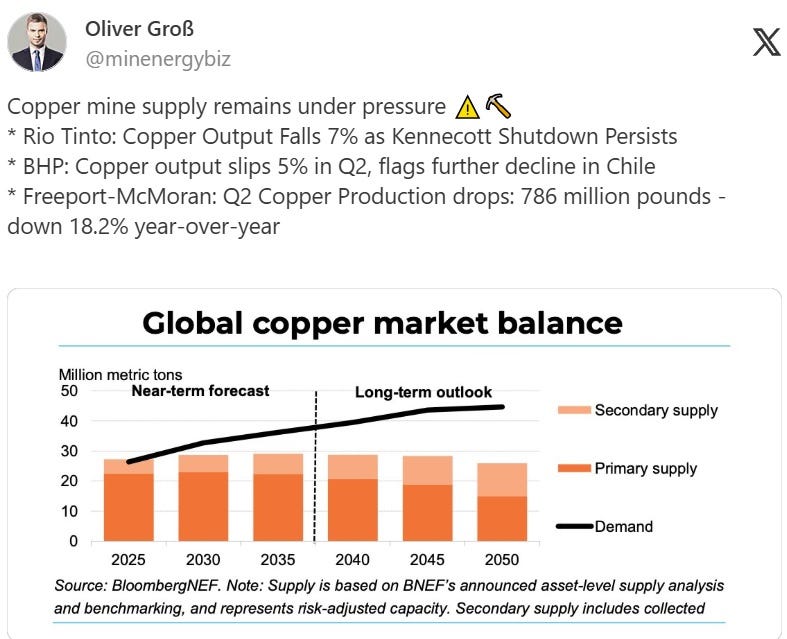
Governments are moving to ringfence copper inside their borders, just as the market tips into its deepest deficit in more than 20 years.
This supply shortage is structural, driven by a combination of declining ore grades and limited mine output. Copper is a necessary metal for utility power grids, electric vehicles, data centers and modern weapons. That’s why the U.S. and other governments are increasingly placing it on their critical or strategic minerals lists – making it a national security imperative.
And there’s no substitute for copper at scale.
Countries engaged in key components of the copper supply chain are increasingly trying to maintain their grip over it.
Below, we detail the key ways the world’s major players are locking up their part of the copper supply chain.
But the broader ramifications of this move are systemic. That’s because they reflect the trend toward future strategic restrictions on copper. The DRC government is following the model Indonesia implemented with nickel, forcing raw material to be processed inside the country to capture more of the value downstream.
Based on our analysis and conversations with thought leaders around the world, we see a growing pattern of resource-rich countries pushing to retain processing and value domestically, which will continue to provide tailwinds to copper prices.
China Is Stockpiling Copper and Halting Acid Exports
China refines nearly half the world’s copper and buys about two-thirds of the concentrate that feeds its smelters.On May 19, 2026, leaders in Beijing issued rules under its revised Mineral Resources Law that name copper a strategic mineral and let the state hold its reserves off the market for at least five years. The China Nonferrous Metals Industry Association, the top Chinese national trade association for metals like copper, aluminum, lead, zinc and nickel is reported to be pushing for a dedicated copper reserve on top of the country’s commercial stockpiles.
Miners with accessible, low-cost copper mines will be highly profitable for decades. See our Portfolio for the copper stocks and ETFs likely to benefit from this trend.
STAY INFORMED! Receive our Weekly Recap of thought provoking articles, podcasts, and radio
delivered to your inbox for FREE! Sign up here for the HoweStreet.com Weekly Recap.