

ALWAYS CONSULT YOUR INVESTMENT PROFESSIONAL BEFORE MAKING ANY INVESTMENT DECISION

July 25, 2026 | Trading Desk Notes for July 25, 2026


Victor Adair


Anything Can Happen – All Markets Are Related To Each Other In Some Fashion
The Notes will be brief today – family weekend, including grandkids and another dog! Yikes!
Energy
The war risk premium was squeezed out of the market in May/June, but it has returned with a vengeance in July. ICE Front-month Brent traded at a high of $101 this week, up from a low of $70 at the end of June.
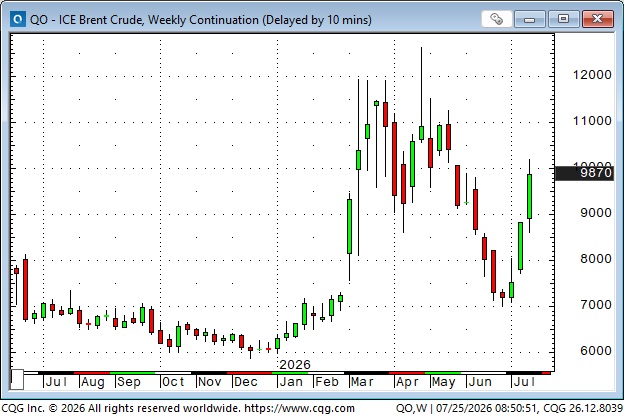
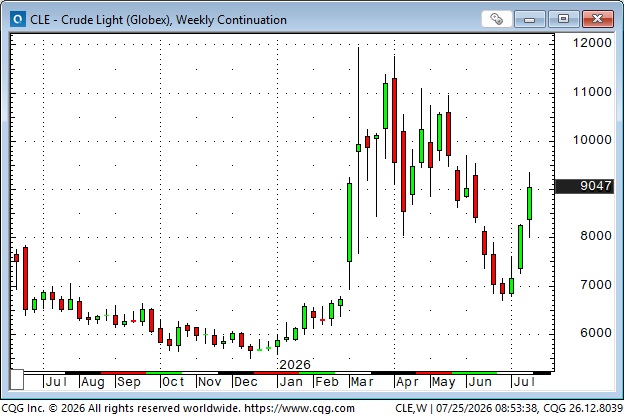
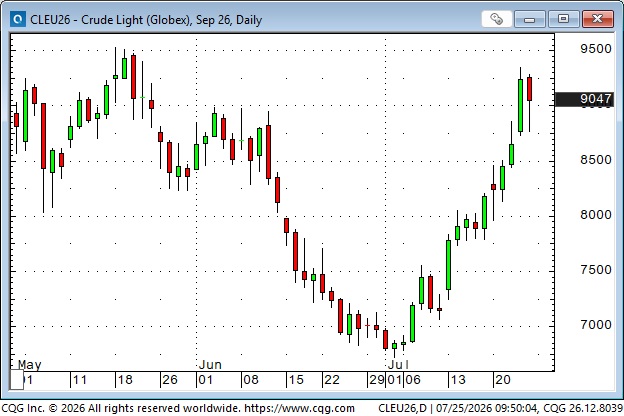
NYMEX Front-month WTI rallied from ~$67 at the end of June to a high of ~$93 this week.
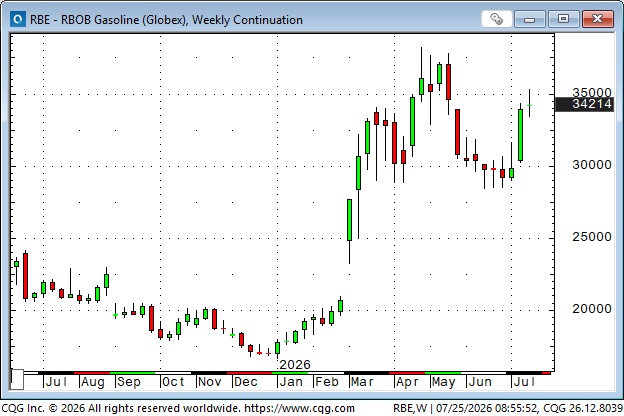
NYMEX Front-month RBOB – wholesale gasoline. US national retail average today: $4.10 per gallon.
NYMEX Front-month heating oil (think of it as untaxed diesel). US national retail average today: $5.25 per gallon.
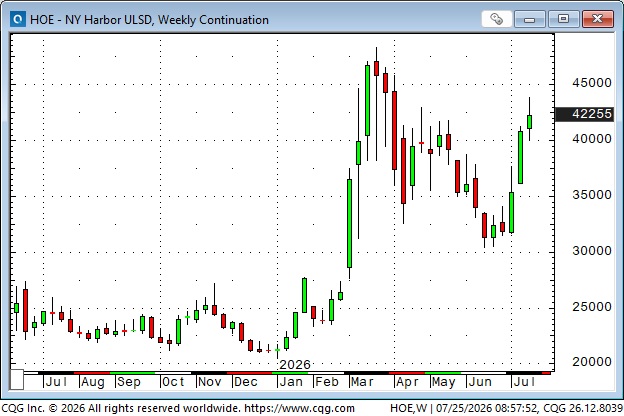
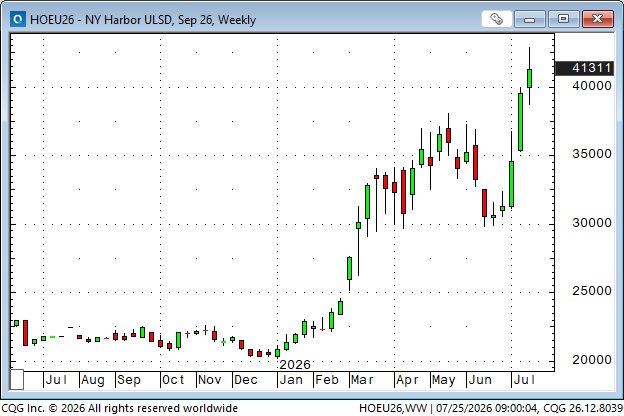
NYMEX September heating oil. Back in March, when the front-month contract was near $4.70, September was ~$3.40. The market was pricing the war to be over by now. It’s not, and September delivery prices have soared.
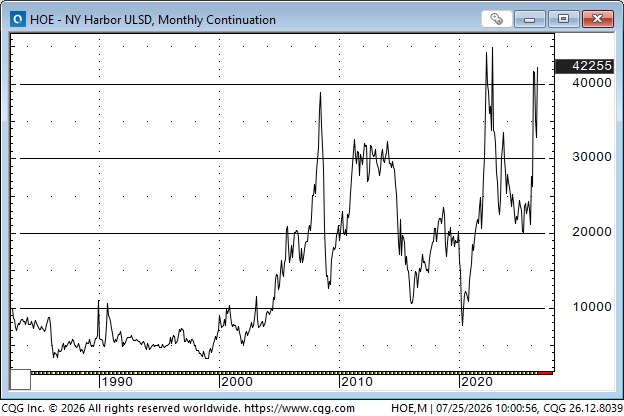
Here’s a long-term chart of heating oil. Even on an inflation-adjusted basis, today’s prices of ~$4.25 are high. The spike highs in Oct 2022 following the Russian invasion of Ukraine were ~$4.65.
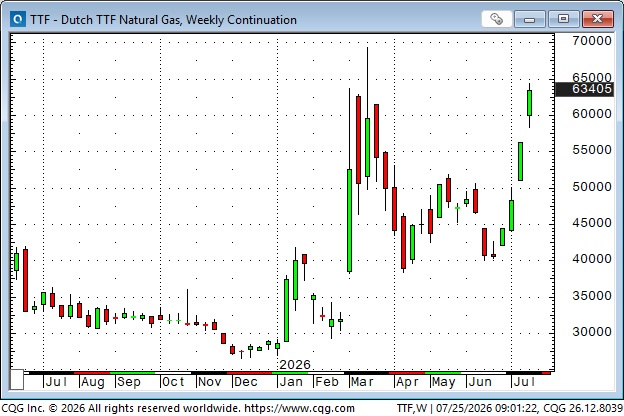
Front-month Dutch Natural Gas
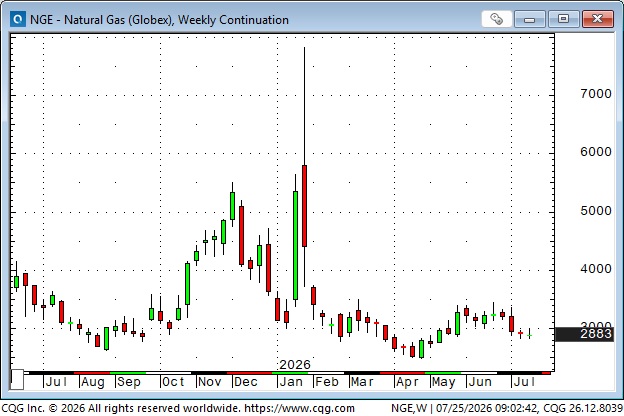
NYMEX Front-month Henry Hub natgas looks a lot different than the Dutch chart. Booming US domestic production is filling storage, while the European storage build is behind schedule, and the European market is bidding for supply.
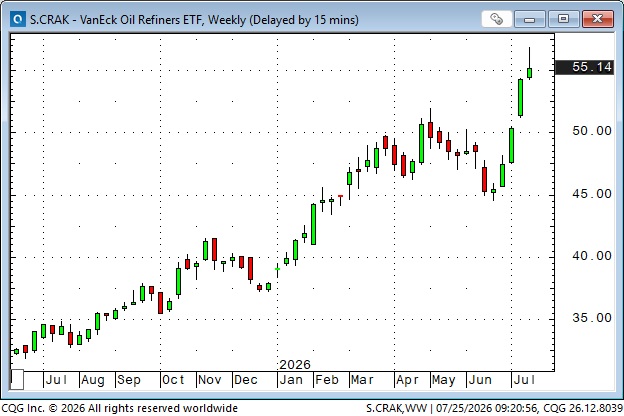
The world is short of oil refinery capacity. Morgan Stanley estimates ~50% of Russian capacity is offline (Irony: European countries, including the UK, are delivering drones to Ukraine, and helping Ukraine build drones that are hitting Russian refineries – talk about poking the bear.) Middle East refineries have delivery issues, while US refineries are running flat out. (The last major US refinery was built in 1977.) US refining margins are wide, as are profits.
VanEck Oil Refiners ETF
WTI prices fell back on Friday (with Trump threatening to hit Iran “like never before”), with the market up ~$20 (~25%) from last week’s close to Thursday’s highs. There were “stories” about ceasefire negotiations, and I imagine some speculators took profits while some producers hedged.
Interest rates
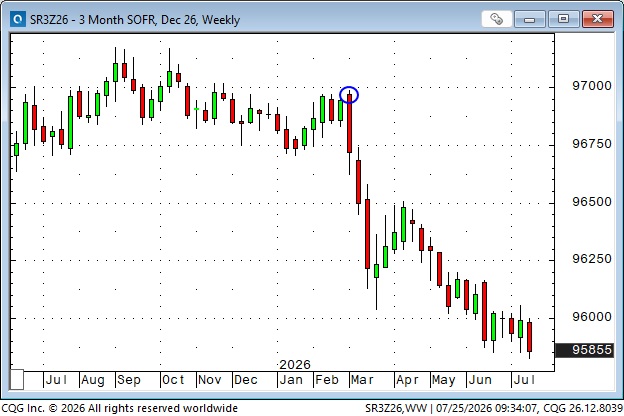
The FOMC meets this coming week, and some analysts expect an increase in short rates as Warsh tries to “get out in front” of (energy-driven) rising inflation expectations. Overall, the market is not pricing an increase on Wednesday, but is pricing Fed rates to be 50bps higher by year-end. The shift to expecting higher short rates started the first week of March when the US and Israel attacked Iran (blue ellipse). The Dec 3-month SOFR contract has dropped ~115 bps since then.
The cash market yield for the US 30-year Treasury reached a 20-year high of 5.16% this week.
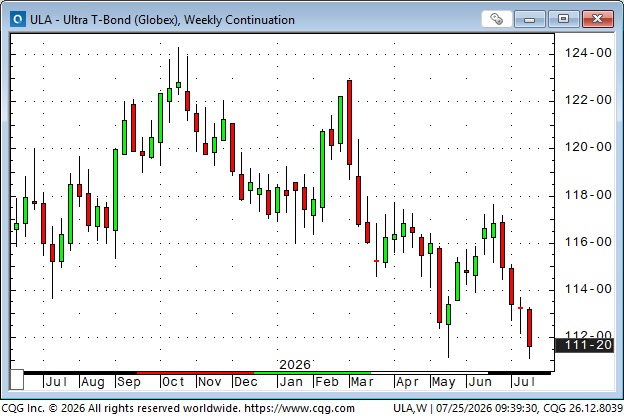
Canadian and German long bond yields reached 15-year highs this week at ~4% and ~3.65%, respectively.
Stocks
Severe short-term chop and rotation continued in the tech sector this week. The Nasdaq had its lowest daily close since early May and was the weakest of the leading indices.
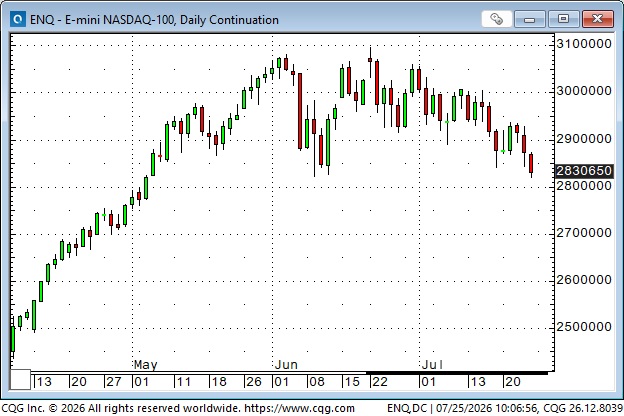
Houston, we have a problem.
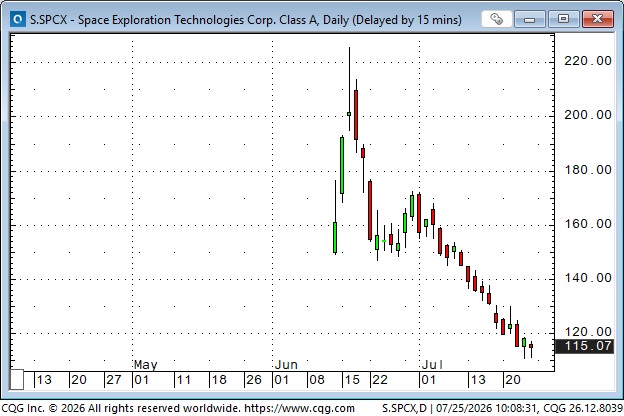
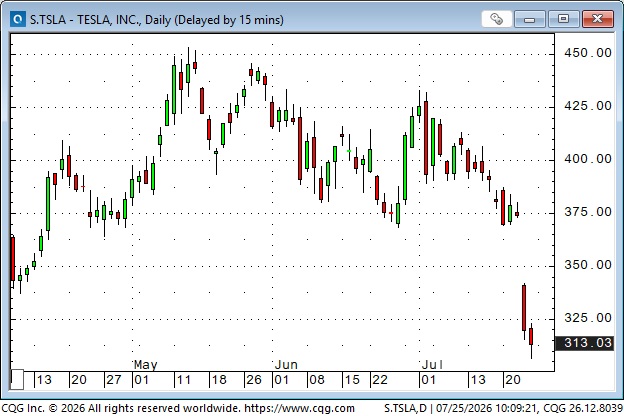
Well, maybe two problems
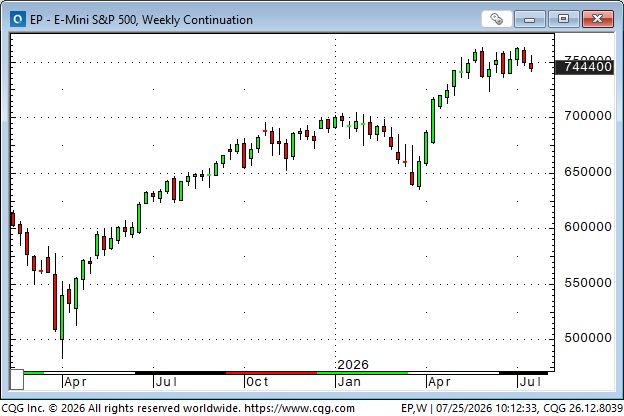
The S&P closed lower for two weeks in a row for the first time since March, but is still inside the 10-week range.
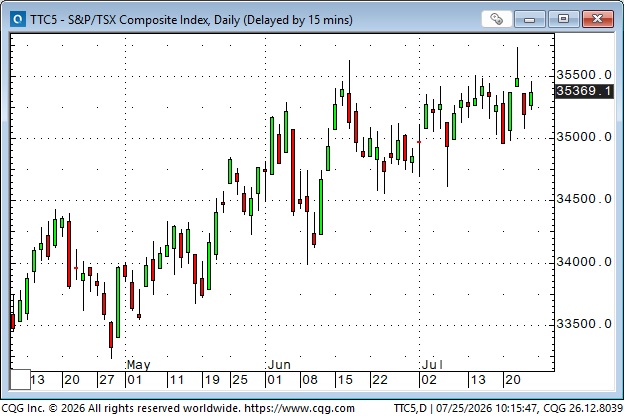
The Toronto Composite rallied to a new record high on Wednesday.
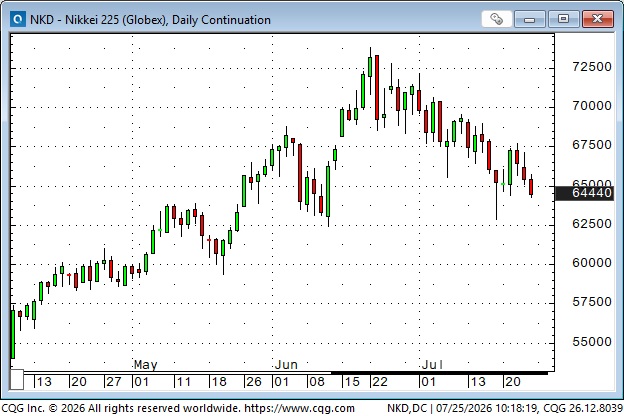
The Nikkei closed lower again this week, reflecting the “air going out” of the over-levered Asian tech bubble.
Currencies
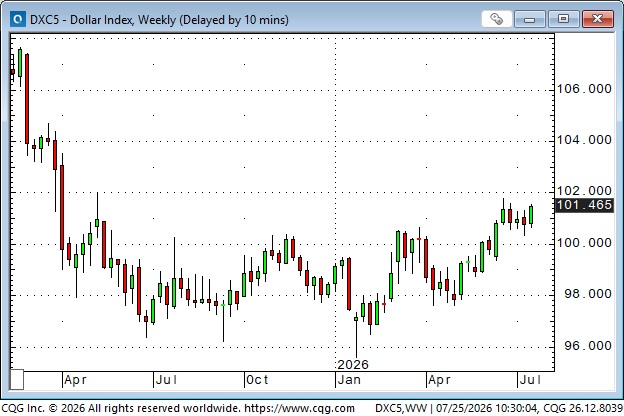
The US Dollar Index is up ~3% in the last three months on interest rate premiums, capital flow to US equities, and haven status. This week’s close was the highest since March 2025, with the index up ~6% from the 4-year lows reached on January 27, 2026.
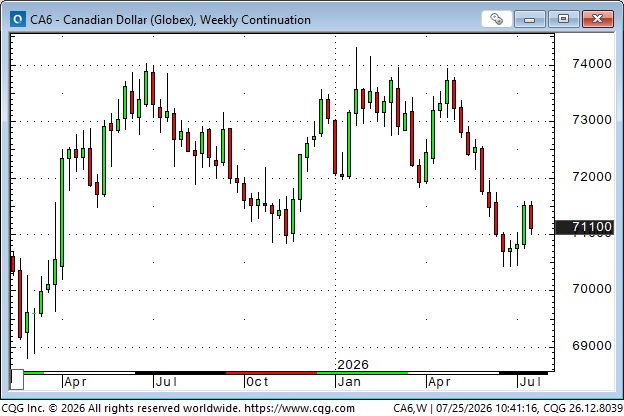
The Canadian Dollar bounced back last week from June’s 15-month lows, but turned lower again this week as CAD/USD interest rate spreads widened. Being a net exporter of oil (~4 MBD) may have softened the decline, but the ~145 bps premium of US short rates over Canadian rates is a powerful force.
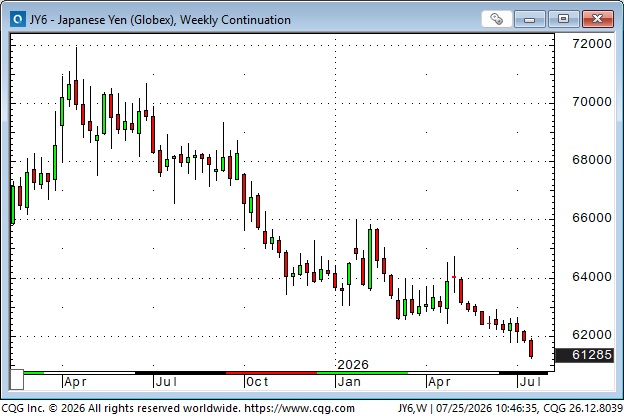
The Yen has continued to fall, reaching new 40-year lows this week, despite “intervention warnings.” Japan imports 97% of its oil and nearly 100% of its coal and natural gas, so rising energy prices are a weight on the Yen.
Gold
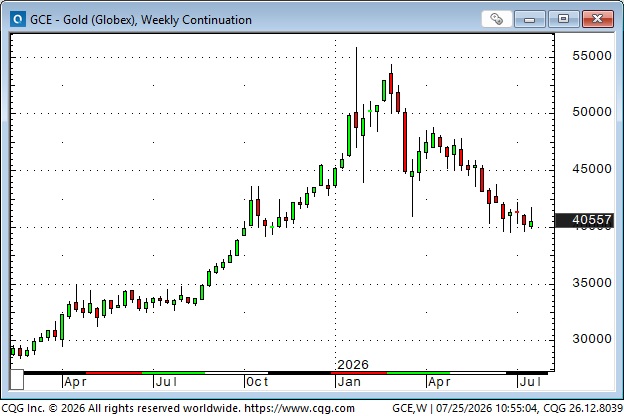
Gold rallied ~$200 from last week’s sub-$4,000 lows to Wednesday’s highs, but closed only ~$30 higher, week over week. A strong USD and higher US interest rates continue to weigh on gold.
On my radar
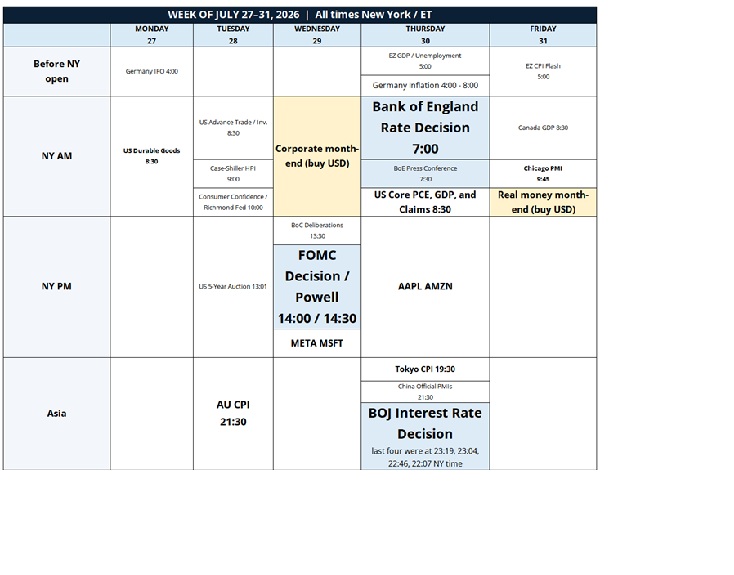
MSFT, META and AAPL all report this coming week. The Fed, the Bank of England and the Bank of Japan meet this week. Here’s a macro calendar from Brent Donnelly for the week ahead.
My short-term trading
I started this week short the S&P and long the Yen. I was stopped for modest losses on both positions. The stop on the long Yen kept me from losing more money; the stop on the short S&P kept me from making money when the market tumbled over 100 points on Thursday. Trading is not a game of perfect. You miss way more than you catch, and you’ve got to learn to live with that.
Thoughts on trading
I’m doing a “re-assessment” of my trading process. I’ve noticed that my trading time frames have (once again) become shorter than my analysis time frames. For example, my analysis generates a good trading idea, but my stops are too tight and/or I’ve been taking profits too quickly.
I think increased volatility and my desire to never take a big loss on a trade have led me to use tighter stops. I don’t mind taking small losses (I tell myself, “they’re a cost of doing business”), but, in my mind, good traders never take a big loss on a trade.
Another “contributing factor” is that I spend hours a day in front of my trading screens; that was required behaviour during my decades as a commodity broker, but may be detrimental to my success as a trader.
I can reduce my trading size to allow wider stops, but I know I need some bigger wins to generate overall gains, so I’ve got to stop taking quick profits. The old axiom “Cut your losses short and let your profits run” is easier said than done!
Barney and the Bear
Barney and I were out for our evening walk near the forest two nights ago when I noticed he was suddenly very alert and his nose was twitching. I thought he was probably smelling a deer, so to avoid him racing off after it, I put on his leash. Moments later, a juvenile black bear stepped out of the forest 50 feet away from us. The bear looked curious, not menacing, and we all stood still for about 30 seconds, and then the bear turned around and went back into the forest. Barney was relaxed, looked at me for a moment, and then we carried on with our evening walk as though the bear had never appeared.

Listen to Mike Campbell and me discuss markets
On the Moneytalks show this morning, Mike and I discussed the surging energy markets and their impact on interest rate expectations and 2nd order effects on currencies and equities. You can listen to the entire show here. My spot with Mike starts around the 46-minute mark.
The Archive
Readers can access any of the weekly Trading Desk Notes from the past six years by clicking here.
Subscribe: You have free access to everything on this site. Subscribers receive an email alert when I post new content, typically four to six times a month.
Victor Adair retired from the Canadian brokerage business in 2020 after 44 years and is no longer licensed to provide investment advice. Nothing on this website is investment advice for anyone about anything.
STAY INFORMED! Receive our Weekly Recap of thought provoking articles, podcasts, and radio delivered to your inbox for FREE! Sign up here for the HoweStreet.com Weekly Recap.
Victor Adair July 25th, 2026
Posted In: Victor Adair Blog