

ALWAYS CONSULT YOUR INVESTMENT PROFESSIONAL BEFORE MAKING ANY INVESTMENT DECISION

March 13, 2026 | Trump Gambles on War with Iran

Hilliard MacBeth


Trump’s Iran Gamble Could Trigger an Oil Shock
20 percent.
That is the share of global oil supply that normally passes through the Strait of Hormuz, the narrow shipping channel between Iran and Oman.
If Iran keeps that chokepoint blocked, the consequences for inflation, interest rates and the global economy could be severe.
The recent U.S.–Israeli strike on Iran may therefore turn out to be a serious strategic miscalculation by President Donald Trump. What appears to have been intended as a quick decapitation strike has instead hardened Iran’s resolve and increased the risk of a prolonged conflict.
Despite the killing of several senior leaders in the February 28 attack, the same ruling circle remains in power and is more determined to defy the United States and Israel after suffering heavy personal losses during the strikes. Revenge, rather than negotiation, now appears to be the dominant political force in Tehran.
Iran has already signaled its willingness to escalate. In his first public statement, the country’s new supreme leader demanded the closure of all U.S. military bases in the region and warned that the Strait of Hormuz could remain blocked.
That threat matters enormously. Roughly one-fifth of the world’s oil supply normally moves through this narrow passage. In recent days tanker traffic has slowed sharply as attacks and insurance concerns disrupt shipping. On March 12 the only tankers reported moving through the strait were Iranian.
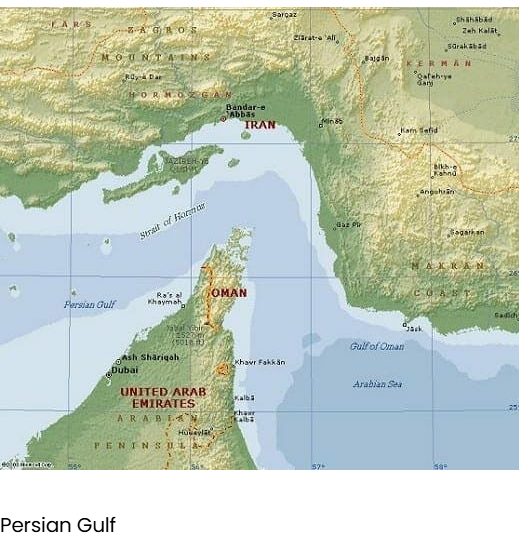
Source: The Strauss Center
For President Trump, the political risks are rising.
He campaigned on ending America’s “forever wars,” and a widening Middle East conflict would contradict that promise. Higher gasoline prices during the summer driving season would also be politically damaging, especially with inflation already running above the Federal Reserve’s target.
Financial markets are beginning to react.
Bond yields have been rising steadily as investors worry about inflation and the fiscal outlook. One bright spot for the White House is the stock market, where the S&P 500 has fallen less than five percent from its recent peak so far.
Meanwhile inflation remains stubbornly elevated. Core CPI is currently running at about 3.6 percent year-over-year, and the next headline number could be even higher. Interest rate cuts appear unlikely in the near term.
Oil spikes have also preceded many financial crises. The oil shocks of the 1970s, the Gulf War in 1990, and the surge in crude prices before the 2008 financial crisis all illustrate how sharply higher oil prices can weaken the global economy.
Historically, gold has performed well during periods of turmoil. An analysis of 56 major geopolitical events since 1973 shows gold consistently outperforming most other assets during times of global instability:
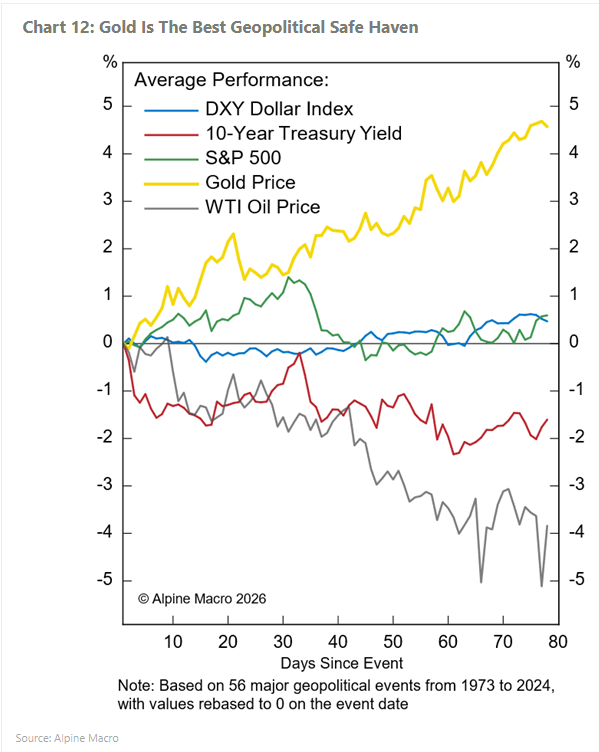
Gold prices at the top, and crude oil at the bottom.
If the Iran war ultimately proves to be a strategic mistake, the political consequences in Washington could be severe. But the economic consequences will appear first — higher oil prices pushing up gasoline prices, feeding into higher inflation followed by a recession leading to an oil price crash.
For investors, the prudent course is clear: prepare portfolios for a more volatile geopolitical environment while hoping the conflict de-escalates.
Hilliard MacBeth
STAY INFORMED! Receive our Weekly Recap of thought provoking articles, podcasts, and radio delivered to your inbox for FREE! Sign up here for the HoweStreet.com Weekly Recap.
Hilliard MacBeth March 13th, 2026
Posted In: Hilliard's Weekend Notebook
Next: AI’s Power Hunger »